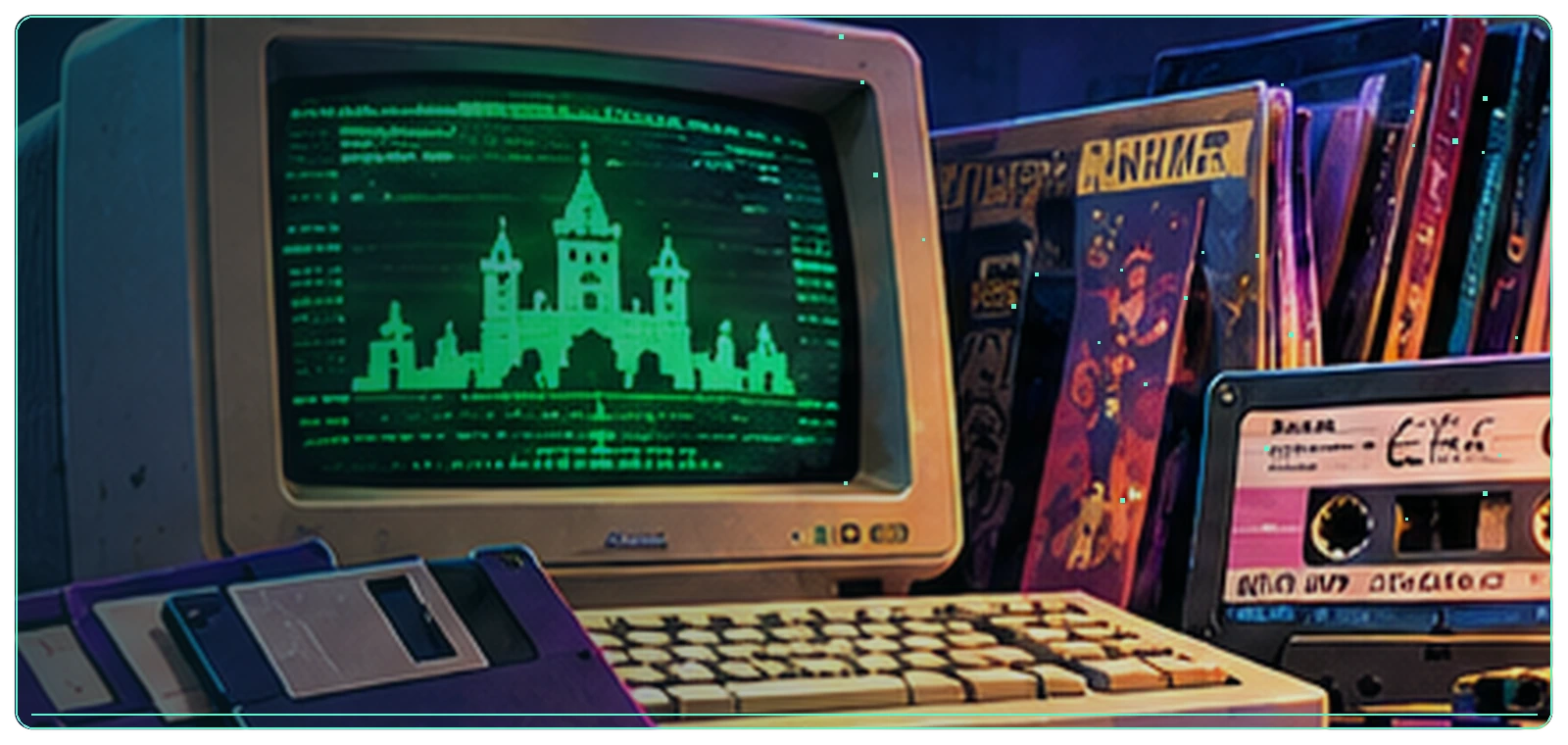
Computers once made their presence difficult to ignore. There were disks to insert, cables to connect, mysterious noises to interpret and a surprising number of opportunities to lose something you’d just finished making. This is where my memories of those machines—and the world around them—begin.
Computers once made their presence difficult to ignore. There were disks to insert, cables to connect, mysterious noises to interpret and a surprising number of opportunities to lose something you’d just finished making. This is where my memories of those machines—and the world around them—begin.
What the machines taught me
My first computer was an Amstrad. I remember the green monitor, the later colour screen and the feeling that a computer was something you could explore, rather than an appliance that already knew what you wanted. Friends had Commodore 64s. I learned to live with DOS, cassette tapes and floppy disks, and discovered that making a machine do something interesting was often more satisfying than getting it to do something useful. It could also be extraordinarily irritating. A disk that stopped working didn’t care how much time you’d spent on the thing stored on it.
Finding the rest of the world
The early internet arrived with the sound of a modem. Bulletin boards, homemade webpages and distant conversations were exciting partly because connecting wasn’t effortless. Then there were the things I wanted to find outside the computer: films on VHS, imported electronic music, library books and places on a paper map. It wasn’t necessarily a better way of living; waiting for something could be tedious, and access depended on what you could afford or find. But I remember the small triumph of finally getting hold of something that had seemed almost unreachable.
Why I still remember
These stories aren’t an argument that technology should go backwards. I’d rather not return to unreliable storage or spend an evening solving a problem that a modern computer handles instantly. What stayed with me was the curiosity the limitations encouraged. The four essays here follow that curiosity from the physical machines to the early web and the things we once had to search for.