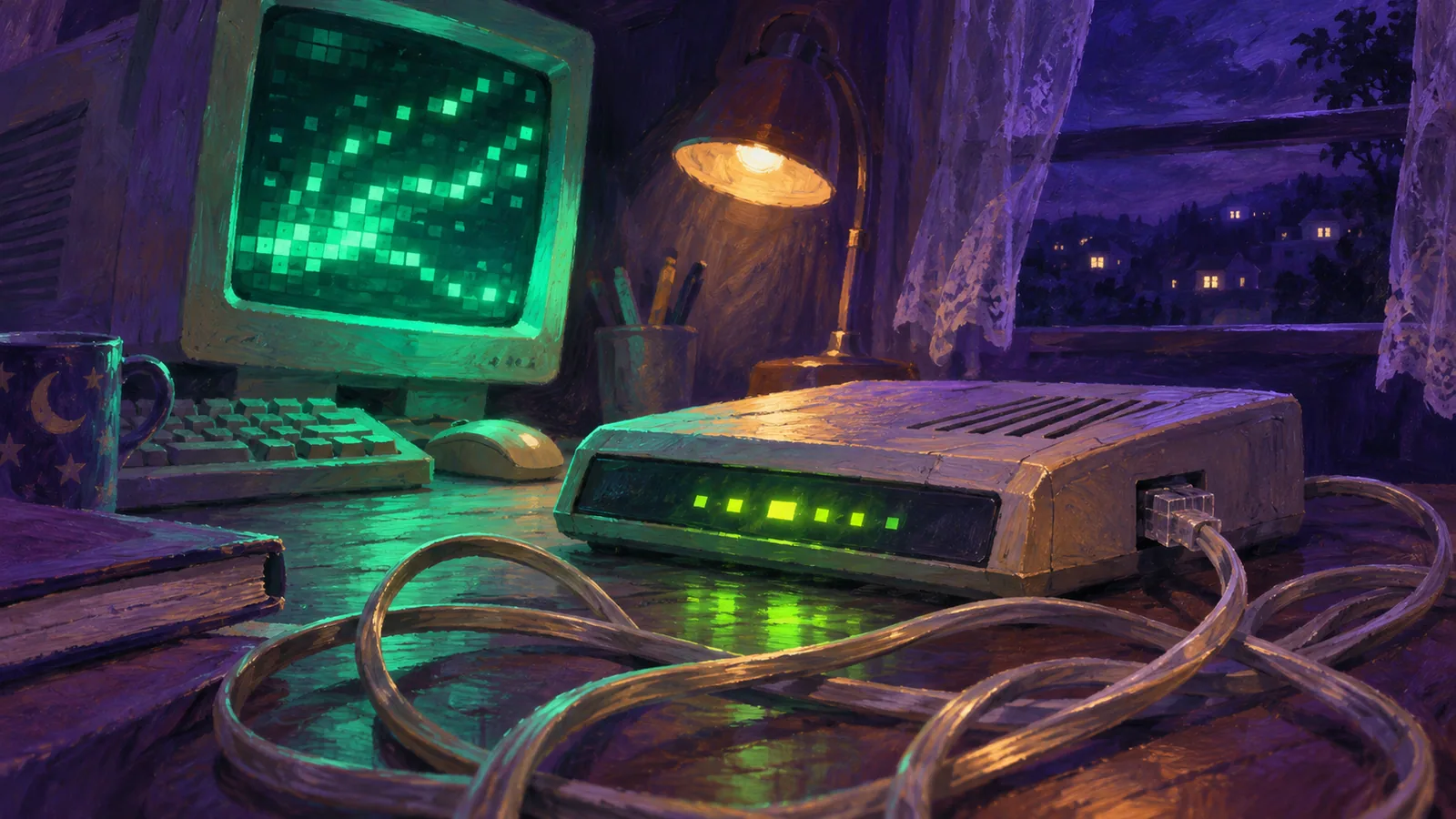
The modem sounded as though it was being tortured. I was delighted.
I remember the sound of a 14.4 kbps modem establishing a connection.
Whistling, squealing and a collection of noises that suggested two machines were having a very unpleasant conversation over the telephone.
Then it stopped.
If everything had gone well, I was connected.
I was sitting at a computer in Denmark, but suddenly I could exchange information with people somewhere else in the world.
I didn’t need to know them. I didn’t need to travel anywhere. The people on the other end might have completely different lives from mine, but we could communicate through the same collection of electronic noises and words on a screen.
The technology was extraordinary.
The connection speed was less impressive.
Somebody on the other end
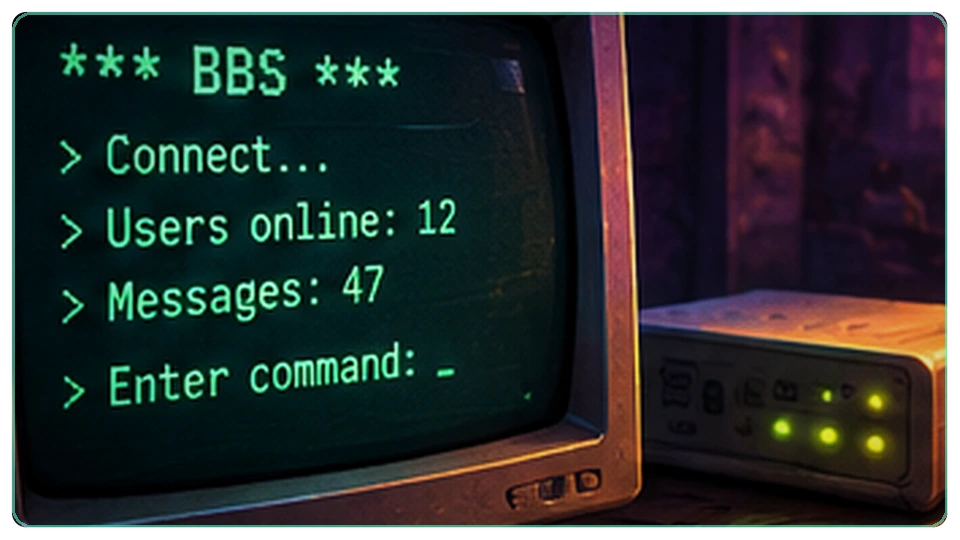
I spent time on bulletin board systems.
BBSs offered messages, files, discussions and occasionally games. Much of the experience happened through text, with little of the visual presentation people have become accustomed to online.
I met people from other countries.
That was remarkable to me.
Someone could write something on a computer thousands of kilometres away, and I could read it from home.
Sometimes we played text-based games.
A room might be described in a few lines. The game would tell you what you could see, and you had to work out what to do next.
I loved fantasy, so imagining the places was hardly a problem.
Occasionally, the challenge was understanding what the game expected me to type.
A perfectly sensible idea could fail because the computer had a different opinion about how the instruction should be expressed.
Anyone who has tried talking to software that doesn’t quite understand them may recognize the experience.
We’ve made extraordinary progress since then.
We still haven’t entirely solved that particular problem.
Everybody was a web designer
When websites became part of my life, I wanted to build them.
HTML gave me a way of creating pages that other people could visit.
I could write some code, put things on a screen and discover how they appeared to somebody using a different computer.
I made websites.
A lot of people did.
The early web contained an extraordinary assortment of design decisions. Backgrounds competed with text, navigation could be an adventure of its own, and somebody inevitably decided that a particular element should move because movement was now technically possible.
I wasn’t immune to questionable design choices.
I doubt many people who experimented with early websites were.
But I loved being able to make something and have it exist on the internet.
It didn’t require a publishing company or a television station.
You could learn enough to create a page, put it online and let somebody encounter it.
Whether they could work out how to navigate it was another question.
A message that wasn't just a message
I also encountered some of the more questionable technical decisions behind early online services.
Chat systems and websites didn’t always handle user input safely.
Something that looked like a message could contain material the software interpreted as instructions. HTML or JavaScript might be processed in places where it should have been treated as ordinary text.
A small experiment could produce results nobody running the service had intended.
It was an interesting way to learn about software security.
It was also a reminder that the person receiving the message hadn’t necessarily volunteered to participate in somebody else’s experiment.
The internet was full of people building things, testing things and occasionally discovering how badly those things had been designed.
Then there were the viruses and worms.
The ILOVEYOU worm in 2000 was an extraordinary example of how much trouble could begin with a message that appeared to come from somebody you knew.
People were curious.
They opened things.
Computers followed instructions.
The result was rather more disruptive than anybody had wanted.
We were connecting the world while still discovering how easily a connected world could be damaged.
Words were enough
I still have an affection for those text-based environments.
You didn’t need an elaborate image to make a location feel interesting.
A description could suggest something much larger than the screen.
A person could become familiar through the things they wrote, without ever needing to show you their face.
When I eventually began writing novels, that pleasure was already familiar.
The books in Max Aura Dungeon contain enormous machines, bizarre creatures and an impressive collection of visual jokes. But some of my favourite moments involve characters trying to understand one another through incomplete information.
Hex communicates through gestures and taps.
Rae records her experiences in a diary, including things she would probably prefer not to have to remember.
Dude spends a considerable amount of time trying to interpret things he recognizes without understanding why they seem familiar.
Words, signals and fragments of information can cause almost as much trouble as the monsters.
Sometimes considerably more.
The connection worked
I wouldn’t trade modern internet access for those old modems.
Being able to communicate instantly, find information and publish things without occupying a telephone line is wonderful.
I have no desire to restore the connection speeds.
Or the bills.
But I remember sitting in front of a computer, hearing the modem finish its terrible conversation and realizing that I could now communicate with somebody on the other side of the world.
I didn’t know who might be there.
That was part of the excitement.
And when someone replied, the little collection of words on the screen was enough.
Continue reading
Previous: Please Insert Disk Two
Next: When Everything Had to Be Found