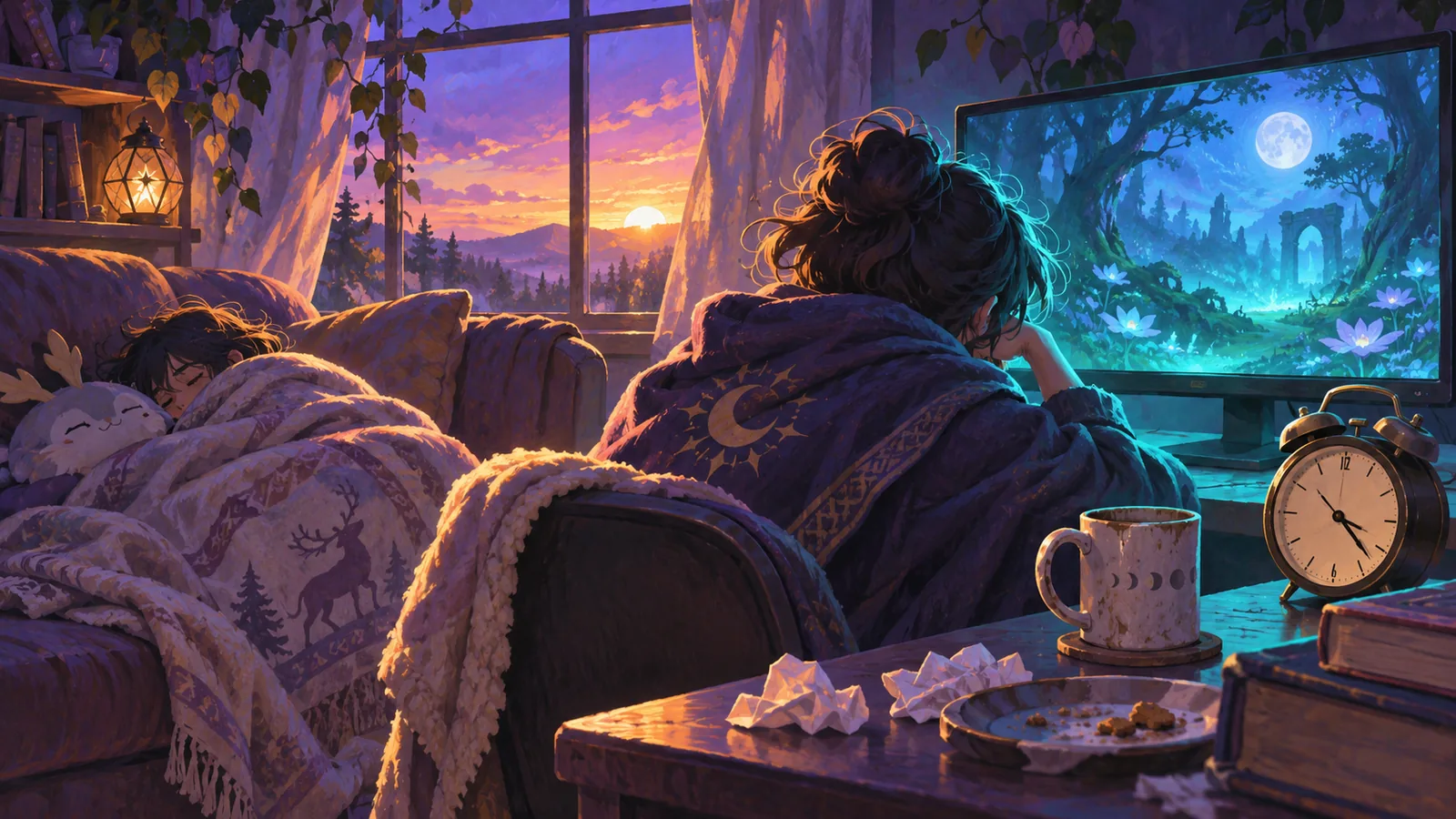
Somewhere in EverQuest, a monster might appear. We had been waiting for hours. Going to bed seemed irresponsible.
There was a period when EverQuest occupied far more of my life than it should have.
I loved the game.
The enormous world. The places I hadn’t explored. The possibility that somewhere, behind the next hill or deep inside a dungeon, there was something extraordinary waiting to be discovered.
I was quite willing to spend time looking for it.
A great deal of time.
And sometimes the activity consisted almost entirely of waiting.
Somebody has to watch the spawn
Certain rewards required extraordinary patience.
Journeyman’s Boots, or JBoots, were among the items players pursued for their useful movement-speed effect.
There could be rare monsters to camp and opportunities you didn’t want to miss.
At one point, a friend was staying with me, and we began taking turns keeping watch in the game while the other slept.
One of us stayed online.
The other rested.
Then we switched.
We had effectively arranged our sleeping patterns around the possibility that a fictional creature might appear.
At the time, this seemed like a clever solution.
The obvious alternative was to turn off the computer and go to bed.
But what if the monster spawned while we were gone?
We’d already waited for hours.
Surely we couldn’t leave now.
So we waited longer.
Looking back, I can see how ridiculous that was.
I also remember how much fun we had.
That’s part of what made it difficult to stop.
A world without an appointment book
EverQuest didn’t organize itself around my schedule.
Rare opportunities appeared when they appeared.
Travelling took time.
Groups needed organizing.
Some objectives required long stretches of concentration and cooperation.
The world continued whether I was there or not.
I loved that feeling.
Discovering something rare seemed meaningful partly because other players were looking for it too, and nobody could simply demand that it appear at a convenient time.
But I began allowing the game to determine far too much of my daily life.
Perhaps another hour would be enough.
Perhaps we’d finally get the reward.
Perhaps something important would happen just after I logged off.
For months, that reasoning helped keep me playing to an unhealthy extent.
I don’t regret having played EverQuest.
I do regret how much control I sometimes allowed it over my time.
Those two opinions have become much easier to hold together as I’ve grown older.
The collector's editions
When EverQuest II was approaching release, I was enormously excited.
I bought special collector’s editions in metal tins.
I even bought one for my first child.
I wanted to experience the new game and hoped to share some of that excitement.
Unfortunately, my computer wasn’t powerful enough to run it properly.
I had the collector’s editions.
I had the enthusiasm.
I didn’t have the hardware.
After all that anticipation, I ended up moving to World of Warcraft instead.
Which, as it turned out, was another game with a remarkable ability to occupy my attention.
Bags and babies
I became the first level 60 druid on my World of Warcraft server, as I remember it.
I also became exceptionally good at making bags.
Crafting appealed to me. There were materials to acquire, recipes to learn and opportunities to become useful to other players.
I enjoyed finding efficient ways to work within the game’s economy.
But my life had changed since those long EverQuest sessions.
I had a family.
There were evenings when I played with a sleeping child resting on one arm while I used my laptop with the other.
A surprisingly large amount of World of Warcraft could be accomplished that way.
Raiding was another matter.
Long encounters with large groups of players required everyone to be available at the same time.
You couldn’t reasonably pause a raid involving forty people because a baby had woken up.
Well, you could try.
I doubt the other thirty-nine players would be delighted.
I couldn’t promise the uninterrupted hours those activities required.
That was frustrating, because I still loved the game.
But I wasn’t willing to make the same sort of commitment that had consumed so much of my time in EverQuest.
And, to be fair, I still played World of Warcraft more than was healthy.
Having a family hadn’t magically cured my ability to become absorbed in a game.
It had made the competing priorities rather harder to ignore.
A game that respects the clock
I understand why some people miss the old MMORPGs.
I miss parts of them too.
They offered enormous worlds, difficult objectives and rewards that players could spend extraordinary amounts of effort pursuing.
I remember the satisfaction of learning something difficult and finally succeeding.
I also remember the hours that disappeared while I pursued things that seemed terribly important inside the game.
Modern games offer different possibilities.
Some let people make progress in shorter sessions. Others make it easier to return after an interruption.
I appreciate that flexibility.
But there are also systems built around recurring engagement, premium currencies and opportunities to pay for things that would otherwise require more time.
I don’t particularly enjoy being pushed toward spending money because the game has made ordinary progress deliberately tedious.
I’ve experienced enough of the opposite problem as well: games where the most valuable resource was the player’s willingness to remain available for hours.
Neither arrangement automatically produces a better adventure.
I would rather have a game that is worth returning to because I’m excited about it.
Preferably one that doesn’t behave as though leaving for dinner is a personal betrayal.
The memory that stayed
There’s a reason the first Max Aura Dungeon novel contains a chapter called Time Does Not Respawn.
I’ve spent years playing games where time, persistence and repeated attempts mattered.
I’ve also experienced what happens when those systems start competing with the people around you.
In the novel, Dude begins learning that his own strange relationship with death and returning doesn’t mean the rest of the world has stopped.
His companions have been living through the time he missed.
I liked exploring that difference in fiction.
In my own life, the lesson was considerably simpler.
I loved EverQuest and World of Warcraft.
I remember the adventures, the rewards and the friends.
But when I think about those evenings playing World of Warcraft, one particular image comes back more clearly than any dungeon or rare item.
The laptop.
The game running on the screen.
And a sleeping child resting against my arm.
The game has long since changed.
The child grew up.
I’m glad I was there to notice.
Continue reading
Previous: The Games That Stayed With Me
Next: Two Ways to Save the World