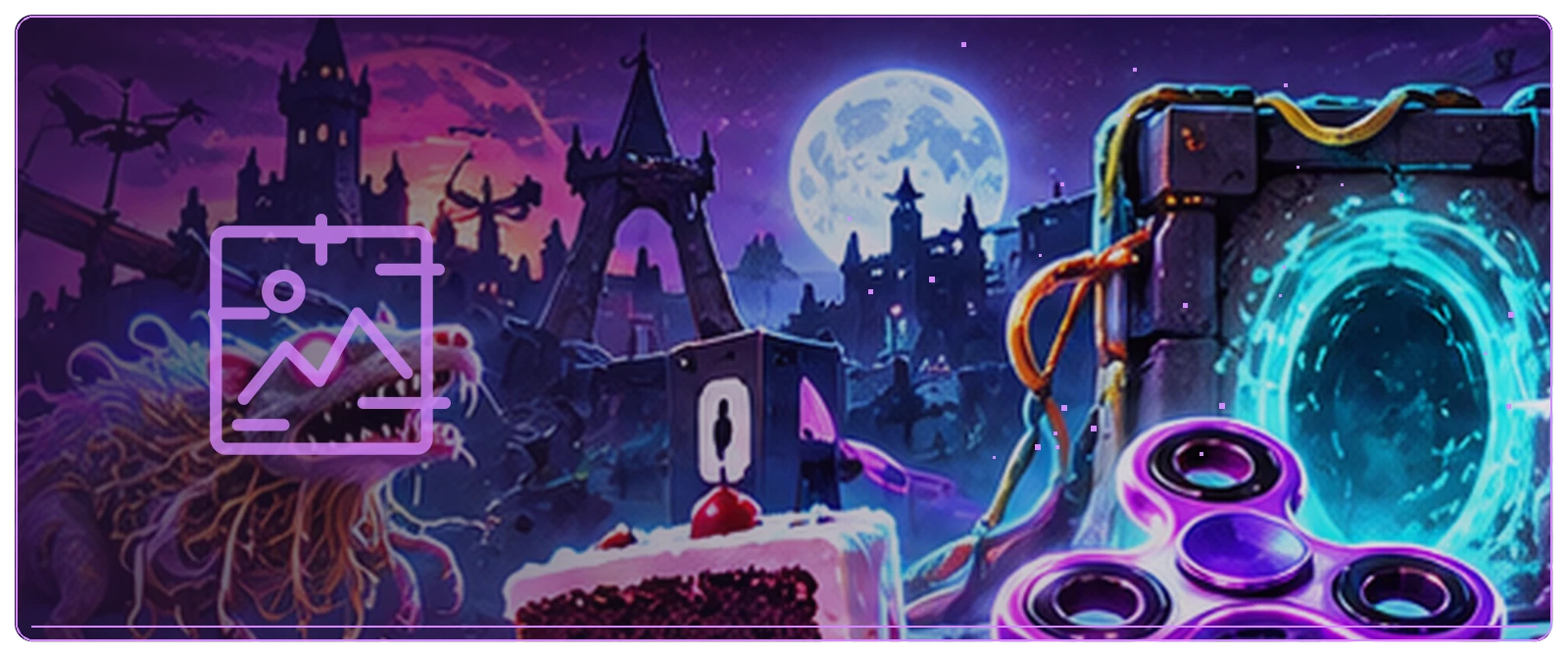
The rat’s fur looked like wet spaghetti glued to its skin. I would have liked to see the original design specifications.
The first rats in Save the Cheerleader are not especially convincing examples of rats.
One has fur resembling little pieces of wet spaghetti stuck to its hide. Others have misplaced ears, strangely bent limbs or growths that seem to belong to entirely different creatures.
They can still run.
They have teeth.
And Dungeon Dude discovers that being badly assembled does very little to reduce a monster’s enthusiasm for biting him.
I’ve spent enough time experimenting with AI-generated images to recognize that particular sort of anatomy.
An image may look perfectly reasonable at first.
Then you count the legs.
Or notice that part of an object has merged with the wall.
Occasionally, the mistake is so ridiculous that correcting it seems almost a shame.
I began wondering what would happen if such things were real.
Max Aura Dungeon has provided plenty of opportunities to investigate.
Count the fingers
Hands became one of the great running jokes of early AI imagery.
Extra fingers.
Missing fingers.
Fingers growing out of inappropriate places.
A perfectly ordinary person holding a coffee cup with enough fingers to qualify for an additional hand.
I remember examining generated pictures and looking for the mistakes.
Sometimes they were obvious.
Other times the image looked wonderful until somebody pointed out that a hand was attached to the wrong arm.
In Save the Cheerleader, Dude encounters printed material with exactly that kind of problem.
One photograph shows nine fingers wrapped around a coffee cup.
Another has fingernails on the palm side.
A picture of a chef features an arm passing through the pan he’s holding.
Dude remembers the old habit of counting fingers in AI-generated images.
Unfortunately, the dungeon contains plenty of examples where the problem isn’t confined to a picture.
Some of the inhabitants really do have the wrong number of limbs.
They seem to have adapted.
The toy that learned to hunt
I remember the sticky-hand toys children could throw against windows.
A little plastic hand on a stretchy strand. Throw it at something, watch it stick, pull it back.
After enough use, the toy collected dust, hair and whatever else was available on the floor.
Eventually, it became too disgusting to be entertaining.
In Reality Roast, creatures living in the tunnels fire remarkably similar hand-shaped pads.
The pads stick to surfaces and pull the creatures along.
They can also grab things.
Including Hex.
Hex is a living hand, which makes the encounter particularly undignified.
At one point, a sticky pad catches one of its fingers.
The creature pulls.
Hex pulls back.
I suspect an ordinary children’s toy would have fared better in that contest if it had known when to let go.
Chef becomes interested in the organisms and begins investigating how they work.
The creatures have feeding behaviour, useful adaptations and an unfortunate tendency to turn basic personal-care products into ecological complications.
Apparently, the dungeon has found a way to make sticky toys even less hygienic than the originals.
Jelly that refuses to stay put
Some of the gel monsters in Reality Roast have a similarly relaxed attitude toward their own anatomy.
Pancake can flatten against a surface and pull itself back together.
Cutting it can produce two Pancakes.
A pink monkey-shaped creature has features that appear to slide around on its body.
And a large gelatinous gorilla manages to envelop Dude.
The characters have to learn what the creatures can absorb, what hurts them and whether a particular attack is making the problem worse.
A monster that resembles animated dessert is an excellent subject for a joke until it starts swallowing people.
Chef, predictably, is interested in the material.
This occasionally puts the rest of the group in the position of trying to survive while the person responsible for dinner evaluates the enemy’s physical properties.
There are worse things than having an enthusiastic researcher nearby.
I’m not entirely sure the characters would agree.
The cat is still the cat
D�j� Mew can resemble an ordinary cat.
Sometimes that involves six legs.
Or two tails.
Occasionally, part of her fur behaves as though the texture has been applied separately from the rest of her body.
One patch moves across her shoulder before settling back into place.
I recognize the kind of visual mistake being suggested.
I’ve rejected generated images for much less.
But Mew is a character in the story. Her unusual body affects how she moves and interacts with the others.
Dude knows her.
She recognizes him.
When she looks particularly strange, he still recognizes the creature he’s become attached to.
I have no desire to make Mew anatomically conventional simply to make her easier to describe.
Although counting her legs can be unexpectedly complicated.
Close enough to be disturbing
The Loopers are less amusing.
Some look blatantly artificial.
Others move and behave much more like ordinary people.
A limb might be a little too long.
A face seems convincing until the person turns.
Something about the proportions is wrong, but you can’t immediately identify it.
I’ve encountered generated images that gave me a similar feeling.
The spectacular mistakes are easy to recognize.
A person with nine fingers is obviously incorrect.
A nearly convincing face can be more disturbing, particularly when it resembles someone you know.
The Loopers allow that discomfort to become part of the encounter rather than something that exists only in the reader’s imagination.
The characters have to decide what they’re looking at.
Sometimes before they’ve had enough time to look properly.
The pictures change
There are two kinds of images involved in this aspect of Max Aura Dungeon.
The first are the photographs, posters and other visual material the characters discover inside the fictional world.
Those images may be damaged, malformed or apparently produced by something that didn’t understand the people and objects it was attempting to depict.
They belong to the mystery the characters are trying to understand.
The second kind are the illustrations accompanying the novels themselves.
I’ve deliberately been developing those images so that the obvious AI-slop qualities become less pronounced as the books progress.
The earlier artwork contains more of the strange anatomy, awkward proportions and uncanny faces associated with generated imagery.
Later illustrations move toward more coherent and convincing representations.
Rae and Chef are among the characters whose visual depictions reflect that change.
I didn’t want the illustrations to remain equally artificial-looking throughout the series.
The visual progression is part of the experience I wanted readers to have while moving through the books.
That doesn’t mean every image is supposed to be an improvement on the previous one.
Nor does it mean the characters are discovering the illustrations in the same order the reader sees them.
The printed photographs and other pictures inside the fiction have their own histories.
The actual illustrations are part of how I present that fiction.
Those are different things, even when they use similar visual ideas.
The writing has fingerprints too
I’ve spent hundreds of revisions working on the Max Aura Dungeon novels.
A considerable part of that effort has involved dealing with habits I recognize from AI-generated prose.
Repeated formulations.
Characters gradually drifting toward generic personalities.
Descriptions that explain something the reader already understands.
And peculiar little sentence constructions that return no matter how often I remove them.
I’ve deliberately allowed some familiar AI-style expressions to remain in the novels.
Even a construction such as “There he is” can be a small reference to the kind of prose I’ve spent so much time editing.
People who have worked extensively with AI writing may recognize some of those traces.
Most readers will probably never notice them.
I still remove a great deal of generic writing because it isn’t enjoyable to read.
And there are probably examples I’ve missed.
An intentional joke about bad prose doesn’t make the prose pleasant merely because I intended it.
I’ve learned that through an impressive number of revisions.
An unfamiliar version of something familiar
The dungeon contains a strange collection of things that resemble pieces of our own world.
Some are almost correct.
Others are absurdly malformed.
There are toys, photographs, machines, familiar cultural references and creatures whose construction seems to have gone wrong somewhere between the idea and the result.
Dude also encounters fragments of memories and traces of institutions such as RC Lab.
He recognizes things he cannot properly explain.
Sometimes that familiarity helps.
Sometimes it makes everything worse.
I’ve left the connections where readers can find them. Explaining them here would spoil some of the surprises.
But I remember how quickly I learned to look for errors when AI-generated images first became common.
Count the fingers.
Check the reflections.
Look closely at the face.
It became a habit.
Max Aura Dungeon contains plenty of things worth examining that way.
Some are obviously wrong.
Others are almost convincing.
And sometimes an image becomes more unsettling precisely because, at first glance, it appears to have got everything right.